The Topography of the Raw Material: Elevating the Organic
Gastronomy presents a uniquely complex visual challenge to the lens. To translate organic matter into a profound visual experience, I must deliberately extract the subject from its familiar culinary environment. The macro lens becomes the primary instrument of this translation, serving not just to magnify, but to entirely re-contextualise the subject. As the glass approaches the ingredient, the extreme physical proximity mandates a radical shift in cognitive scale, demanding that the viewer look at the material rather than merely recognise it.
This proximity forces the brain to interpret a microscopic detail as a tactile, expansive landscape. The intricate veins of a leaf, the surface of scales and skin, or the underbelly of a mushroom expand into a geography of texture and shadow. By isolating the ingredient and meticulously managing the optics, I create a calculated abstraction. The brain is forced to process a biological subject as a geographical terrain, confronting the viewer face to face with the underlying mechanics of organic growth.
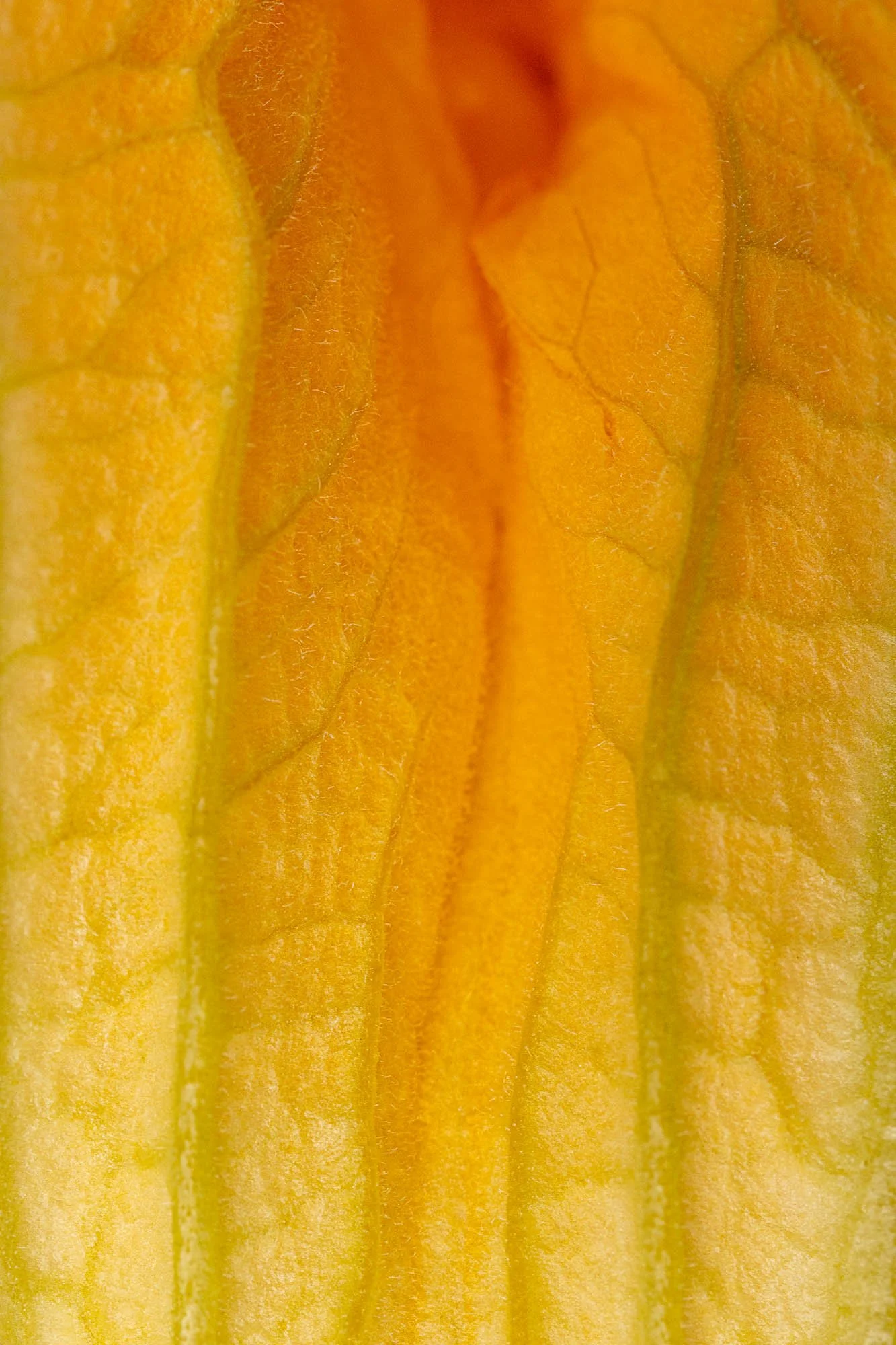

Detail: Carabineiro Prawns
The Integrity of the Ingredient
“At a 1:1 reproduction ratio, the lens becomes an unforgiving auditor of quality. You cannot fabricate freshness.”
In high-end restaurants, the absolute physical perfection of the raw ingredient dictates the structural integrity of the final image. When I work at a microscopic scale, the lens magnifies not just texture, but cellular structure and vitality. I rely on the pristine, unblemished surface of courgette blossom leaf, or the intense, wet saturation of a raw carabineiro prawn to anchor the image in reality. At this level of magnification, the camera acts as a strict auditor; it cannot compensate for degraded produce, wilted fibres, or blemished surfaces.
The below detail of a Gilt-head Seabream, for example, becomes a rigorous study in clarity, pigmentation, and moisture. Every microscopic detail - the tension of the skin, the gloss of the eye, the hydration of the tissue - must be completely flawless to withstand the scrutiny of the macro lens. Therefore, the chef's rigorous sourcing becomes the absolute optical foundation of my photograph. The physical truth of the ingredient dictates the success of the visual translation before the picture is even taken.
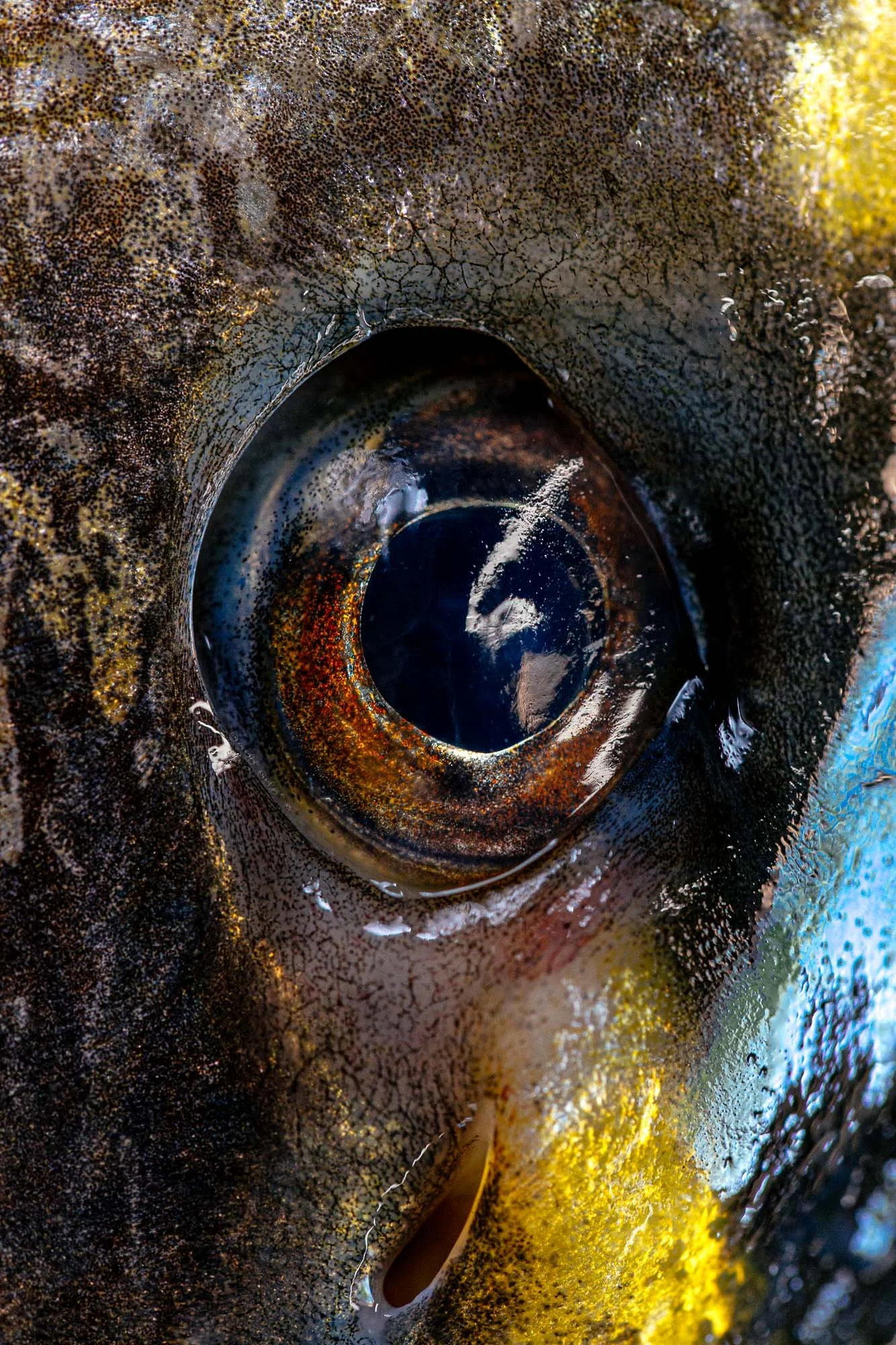
Detail: Gild-head Sea Bream
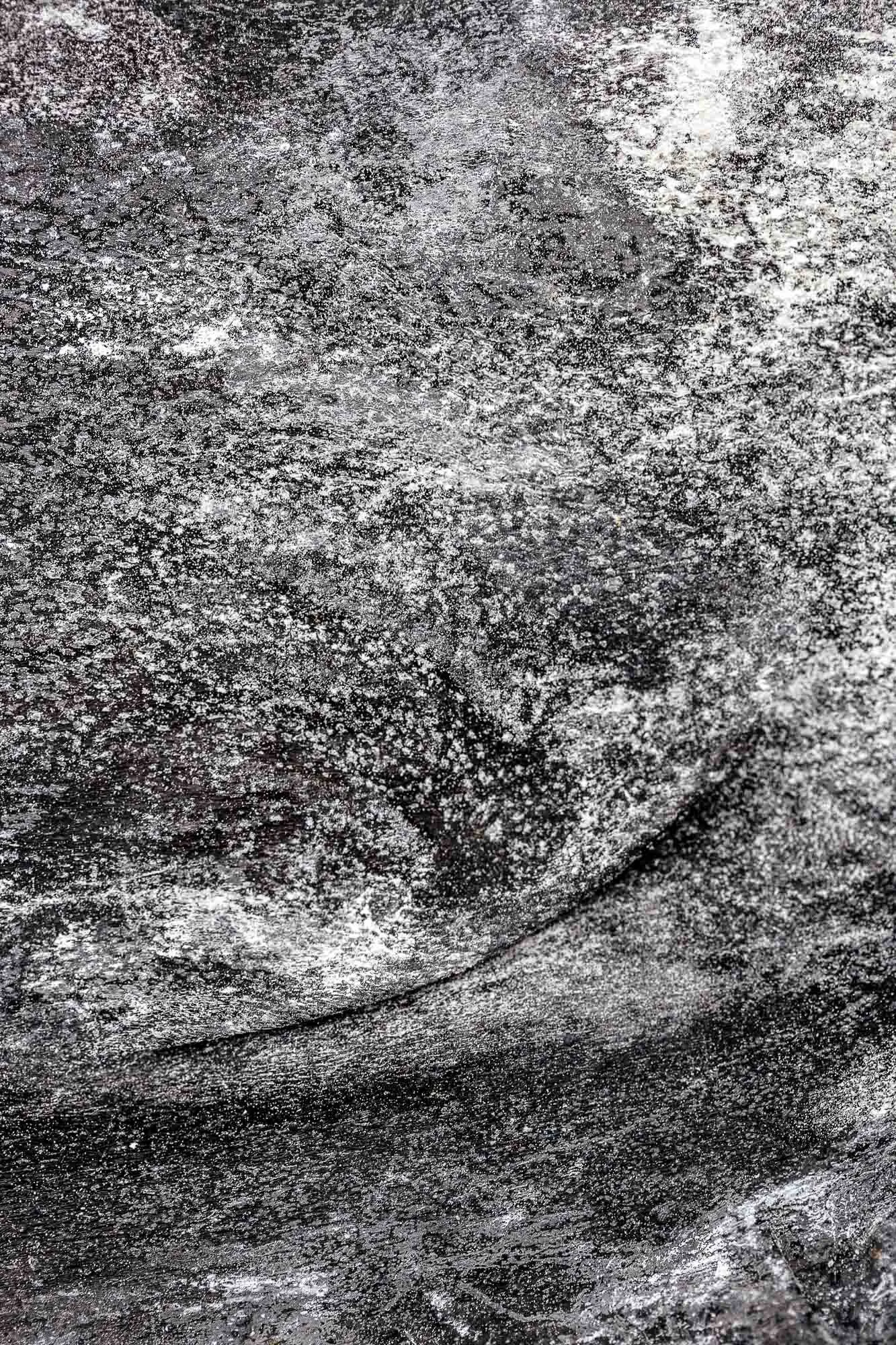
Detail: Kombu Seaweed
The Mechanism of Abstraction and the Frame
“By deliberately excluding contextual anchors, a familiar ingredient ceases to register as food and becomes a geographical terrain.”
I rely on the strict discipline of the frame as a mechanism to force abstraction. By moving in close and meticulously cropping out the edges of a plate, the workbench, or the recognisable silhouette of a vegetable, I systematically deny the viewer their usual contextual visual cues. This mechanical exclusion of the familiar is a deliberate optical strategy. It strips the subject of its domestic associations and prevents the eye from lazily categorising the image as a mere component of a meal.
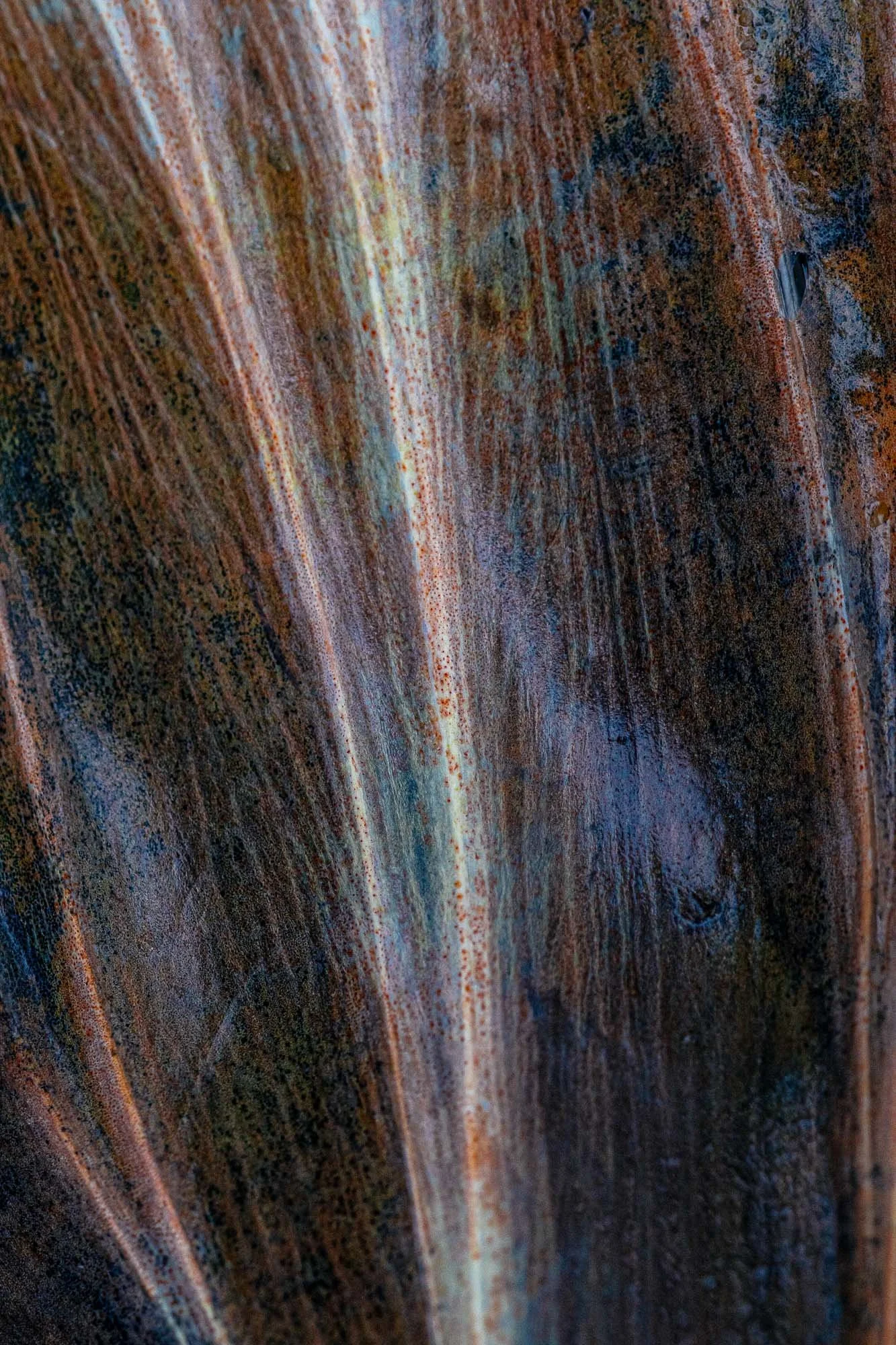
A cross-section of mackerel skin, when stripped of its culinary context, ceases to be seafood; the frame isolates the lateral line and the iridescent scales, forcing the brain to process the image as a metallic, undulating landscape. A sheet of Japanese seaweed or a cheese crust become a dense, edge-to-edge tapestry of pure texture. This aggressive cropping forces the mind to stop anticipating sustenance and to start analysing pure form, transforming a biological specimen into an independent architectural structure.
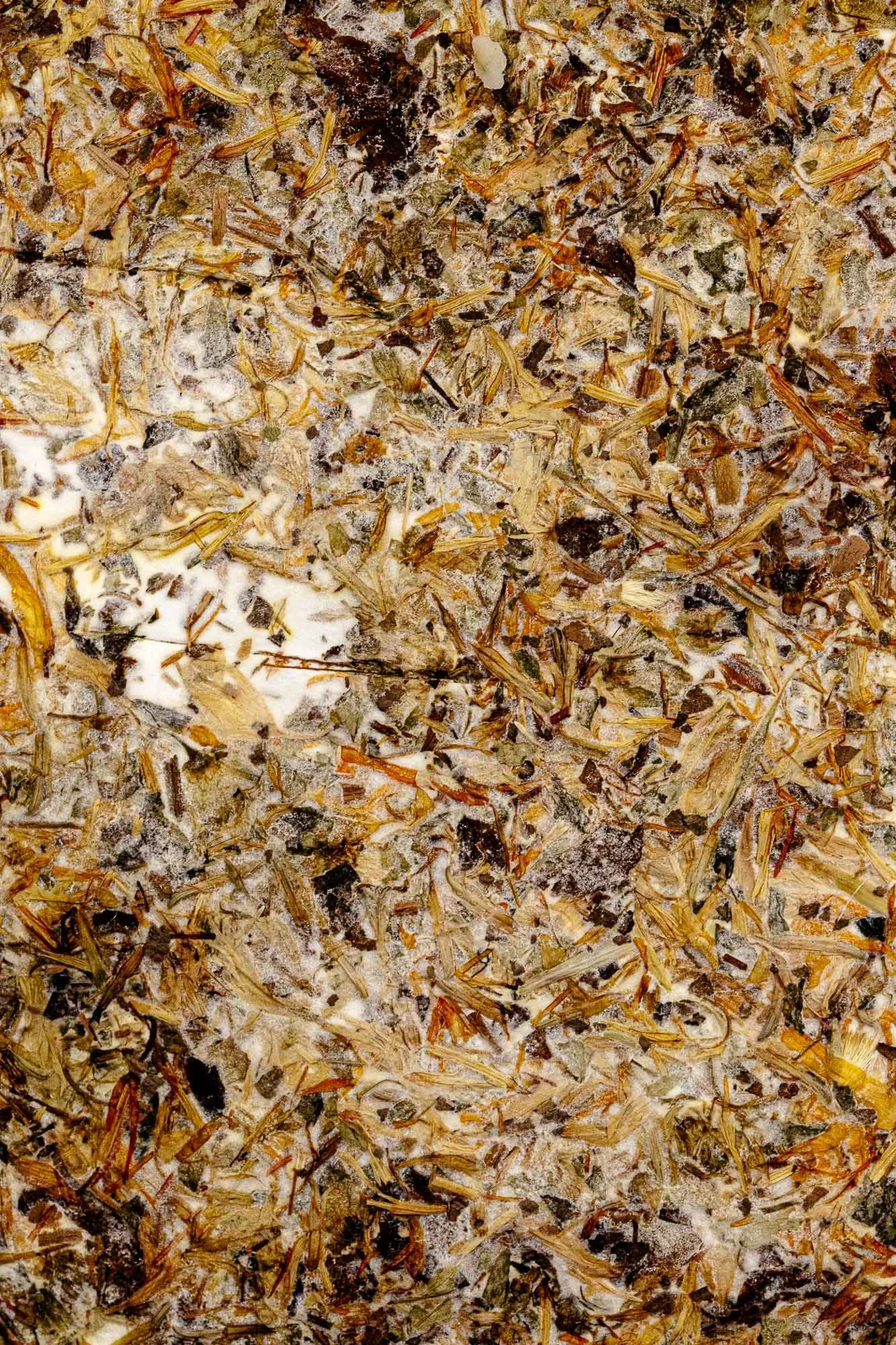
Sculpting with Natural Light
To translate the translucency and density of organic matter, I rely exclusively on natural light, rejecting the artificiality and harsh fall-off of studio strobes. My physical process involves meticulously controlling the direction of the sun, using flags, reflectors, and diffusers to sculpt the material. Raking light across the underside of a mushroom cap carves deep, architectural shadows into its radiating gills, establishing a rigorous geometric rhythm that gives a relatively flat surface immense three-dimensional volume.
Directional daylight is equally crucial for highlighting the microscopic hairs and delicate capillary veins on the surface of a yellow squash blossom, or the oxidised, leathery ridges of a sea bream tail. By carefully managing the angle and diffusion of this light, I engineer a high-contrast visual stimulus that reveals the inherent tactile quality of the ingredient. The light is not merely an illuminant to ensure correct exposure; it is a chisel used to define the topography and physical presence of the subject.

Detail: Pheasant Plumage
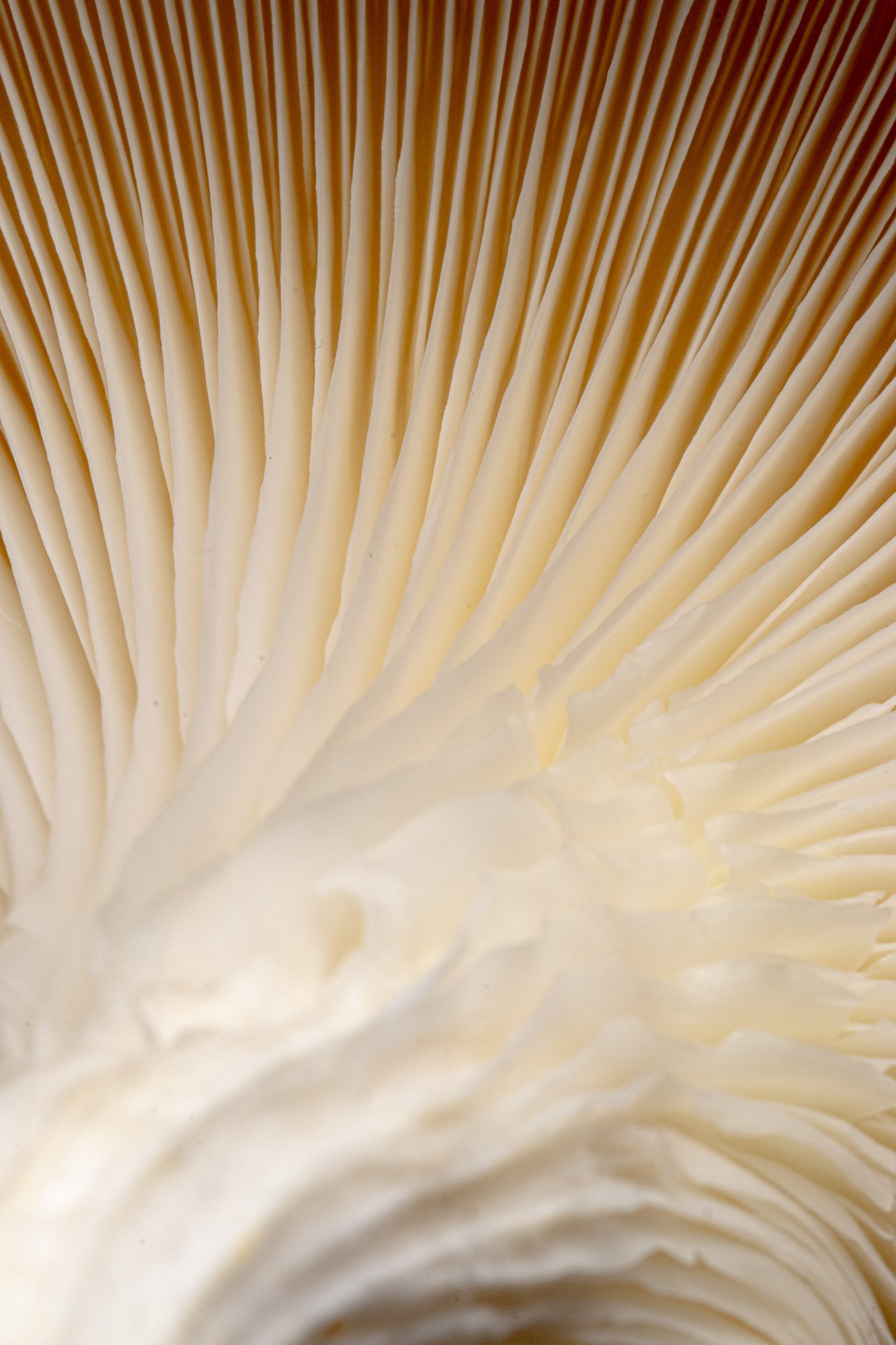
Detail: Oyster Mushroom
The Mechanics of Depth and the Focal Plane
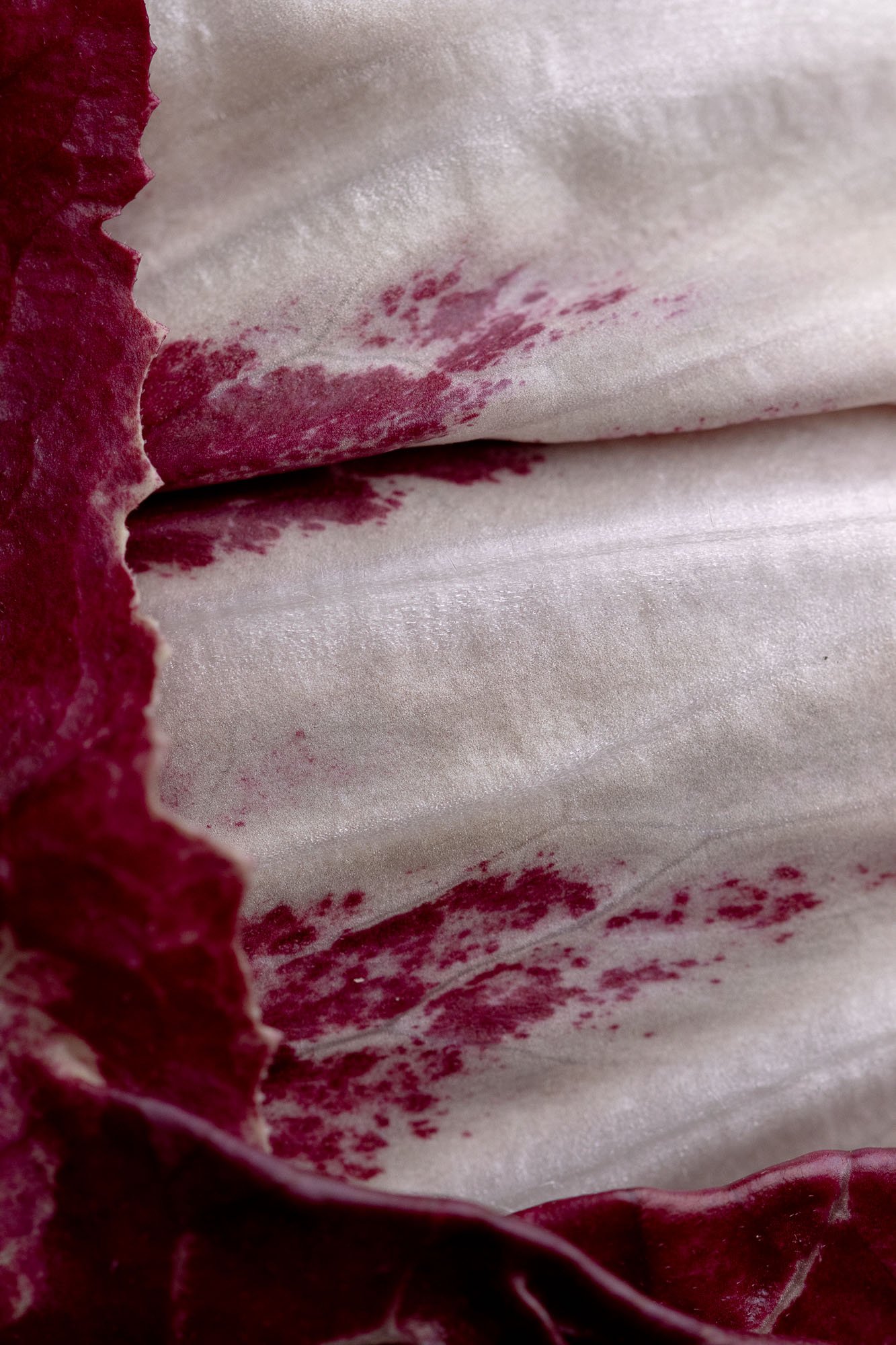
The optical physics of the macro lens provides the mechanical tool to dictate cognitive focus. I enforce this through two distinct optical decisions, driven entirely by the physical geometry of the subject. Often, I aggressively compress the depth of field, allowing a single, razor-sharp ridge of a radicchio leaf or the layered, iridescent barbs of pheasant feathers to intersect the frame, while the foreground and background dissolve rapidly into an atmospheric blur. This mechanical operation strips away redundant visual noise, directing the eye with absolute precision to a specific cellular detail.
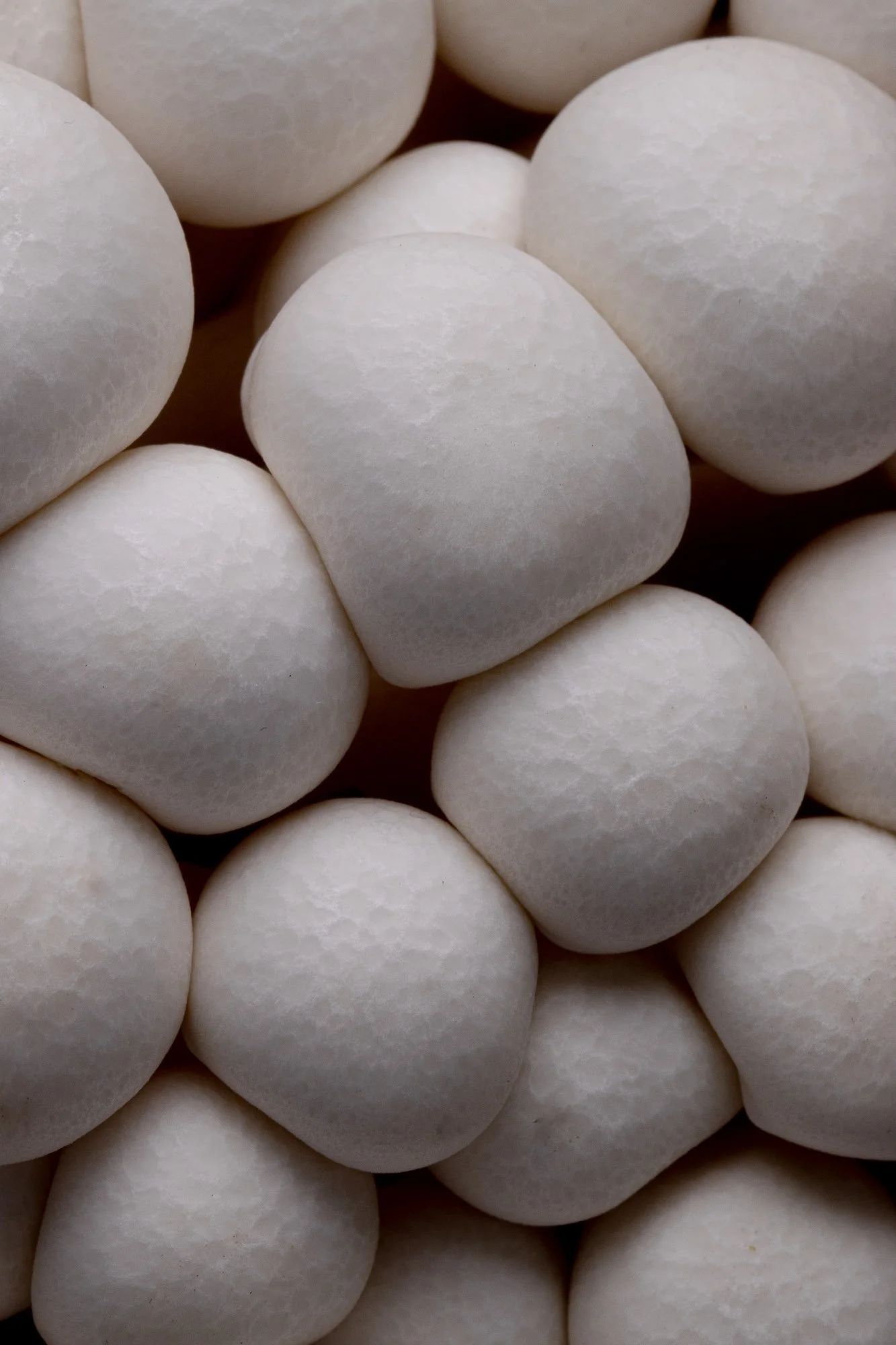
Alternatively, when I require the entire micro-landscape to be comprehensively sharp, I do not rely on digital manipulation or focus stacking. Instead, I seek out a perfectly flat plane within the subject itself, aligning the camera's sensor absolutely parallel to this surface. This demands exacting physical precision and a masterful control of the tripod and focal ring, but it captures the organic texture in a single, unadulterated exposure. It presents a cohesive, corner-to-corner field of data that the human eye could never naturally isolate at that scale, granting the subject undivided cognitive authority.
The Architecture of the Ephemeral
Mastering these visual mechanics shifts the subject from the ephemeral to the enduring. The raw materials of gastronomy are inherently temporary; they are destined for immediate consumption or rapid biological decay. My objective as a photographer is to intercept the ingredient at the absolute apex of its physical perfection, suspending it in a fraction of a second to engineer a definitive visual translation of its existence.
Through the precise manipulation of framing, natural light, and focal planes, the biological instinct of appetite is entirely bypassed. The viewer is compelled instead to engage with the subject through a heightened aesthetic perception, responding to the neurological reward of pure colour, contrast, and geometry. The camera untethers the ingredient from the kitchen, translating its temporary, organic state into a lasting, structural architecture.
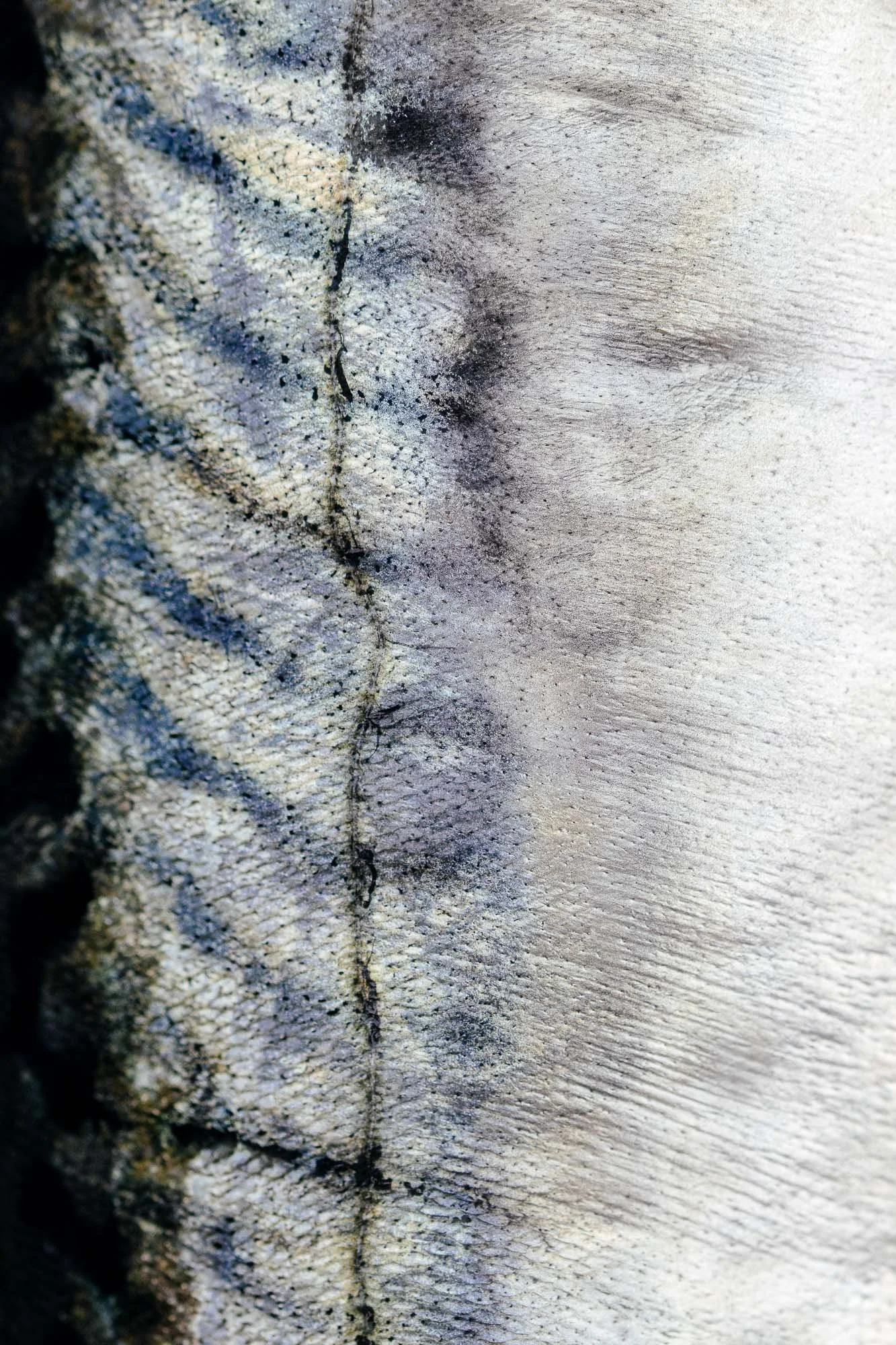
Detail: Mackerel Skin
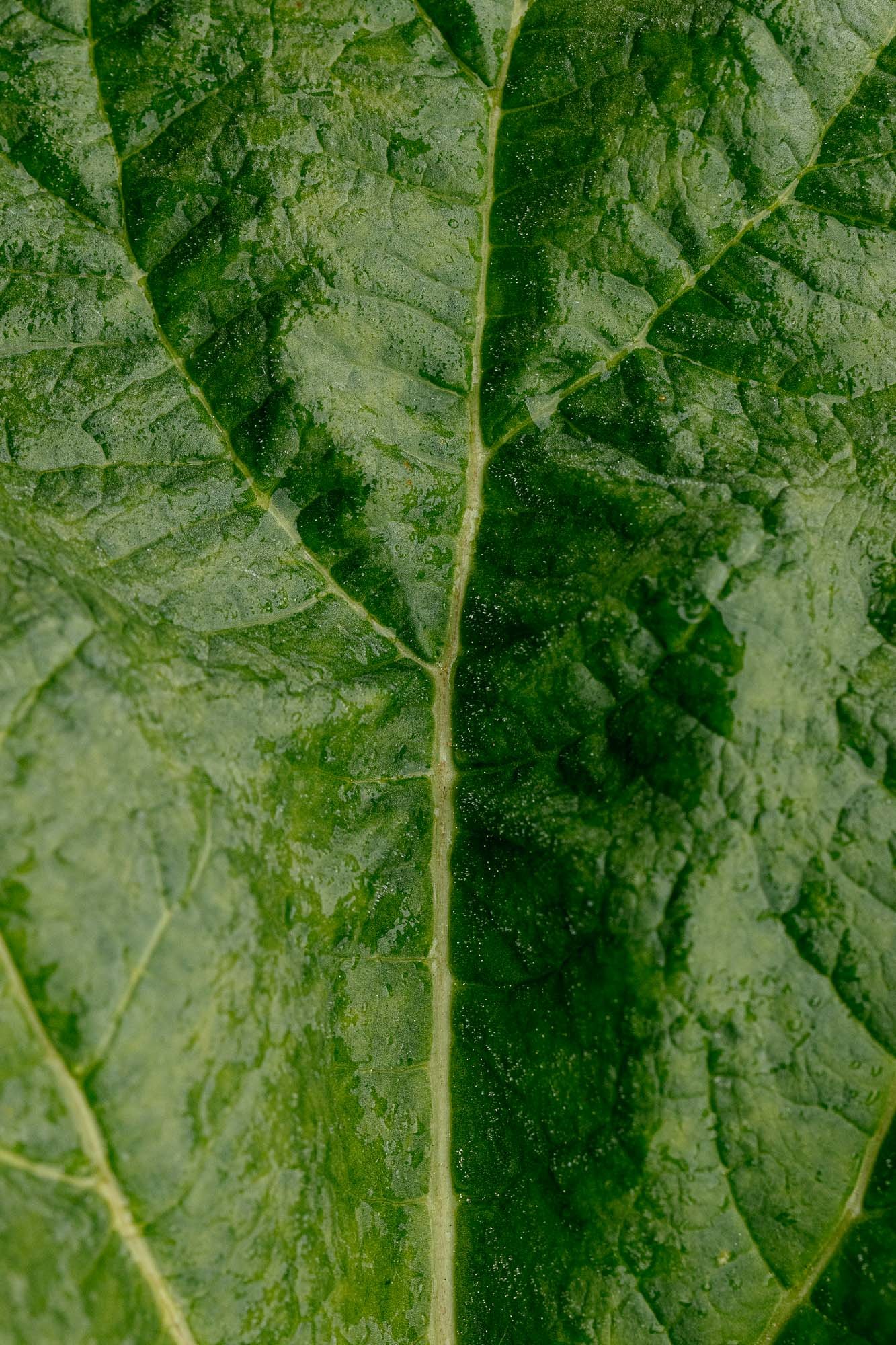
Detail: Spinach Leaf