The Negotiation of the Gaze: The Friction of the Human Subject
There is a distinct psychological friction inherent in portraiture. The moment a lens is pointed at a human being, reality is immediately compromised. The subject - particularly high performers and creative leaders who are accustomed to controlling their environments - instinctively constructs a mask. They project the version of themselves they believe the world requires.
The conventional photographer accepts this mask, records the performance, and calls it a portrait. But an uncompromising image-maker recognizes that the persona is merely the starting point. The absolute truth of the subject lies beneath it, and extracting that truth requires a rigorous psychological architecture.
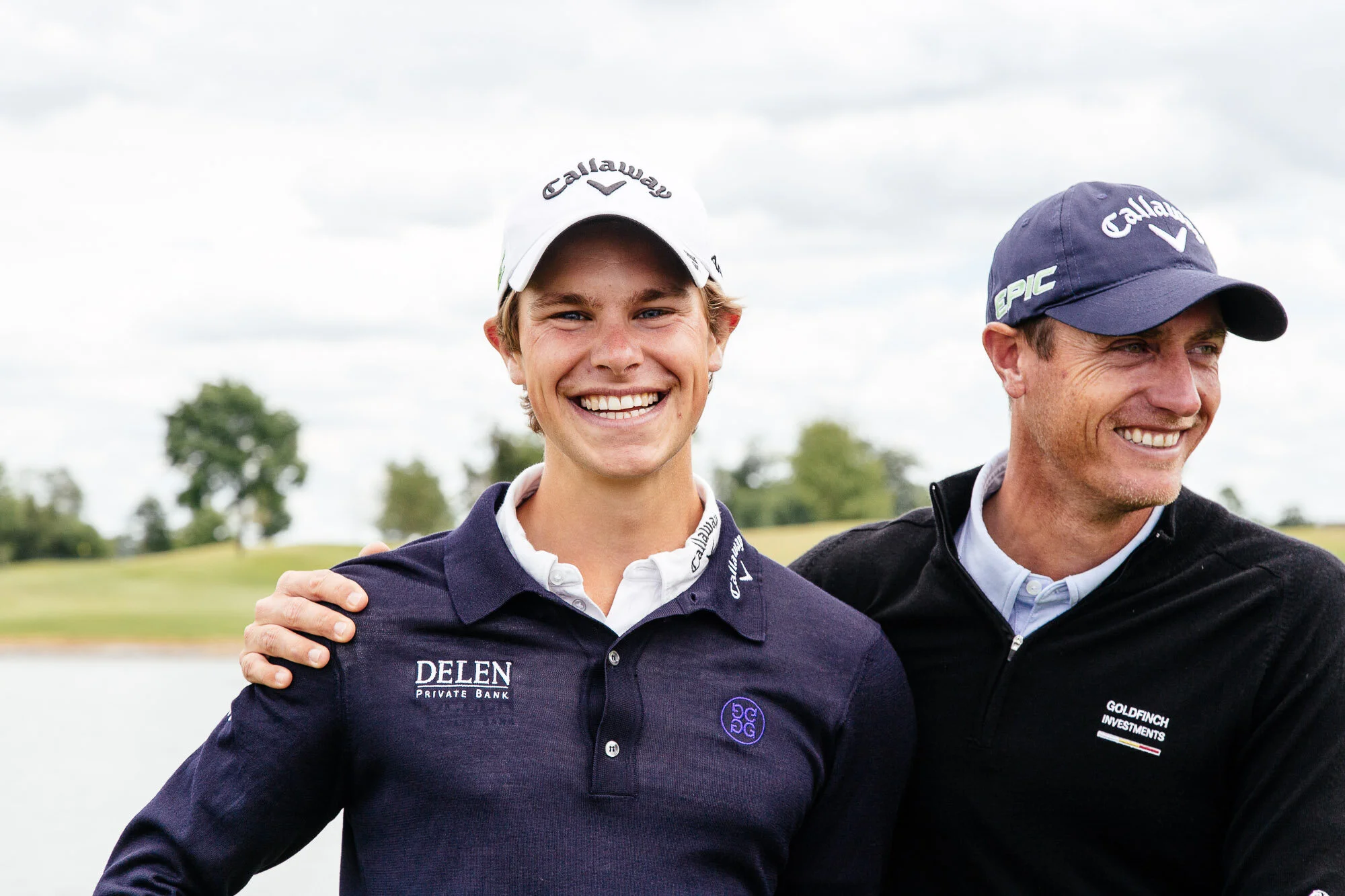
Belgian golfers Thomas Detry (left) and Thomas Pieters (right) at the opening of The National Golf Club.
The Architecture of Context vs. The Void
A portrait is never a passive recording; it is the active record of a negotiation. The first strategic decision in this negotiation is the control of the environment—a deliberate staging that dictates exactly how the subject’s authority is perceived. We must choose whether to anchor them in their domain or isolate them in the void.
When working with high-level individuals, their surroundings are often extensions of their power. In an environmental portrait, the architecture is not a passive backdrop; it is an active participant in the narrative. It serves as a contextual anchor, providing the viewer with immediate, tangible data about the subject's legacy and domain. When a chief executive is staged in the grand foyer of a historic Hôtel Particulier, every element is deliberate - the hand resting on an open door, the posture of welcome. The subject is not merely occupying the room; they are commanding the threshold.

Frédéric Rouzaud, Maison Louis Roederer. The architecture of context; the environment utilized as an active anchor of legacy and domain.
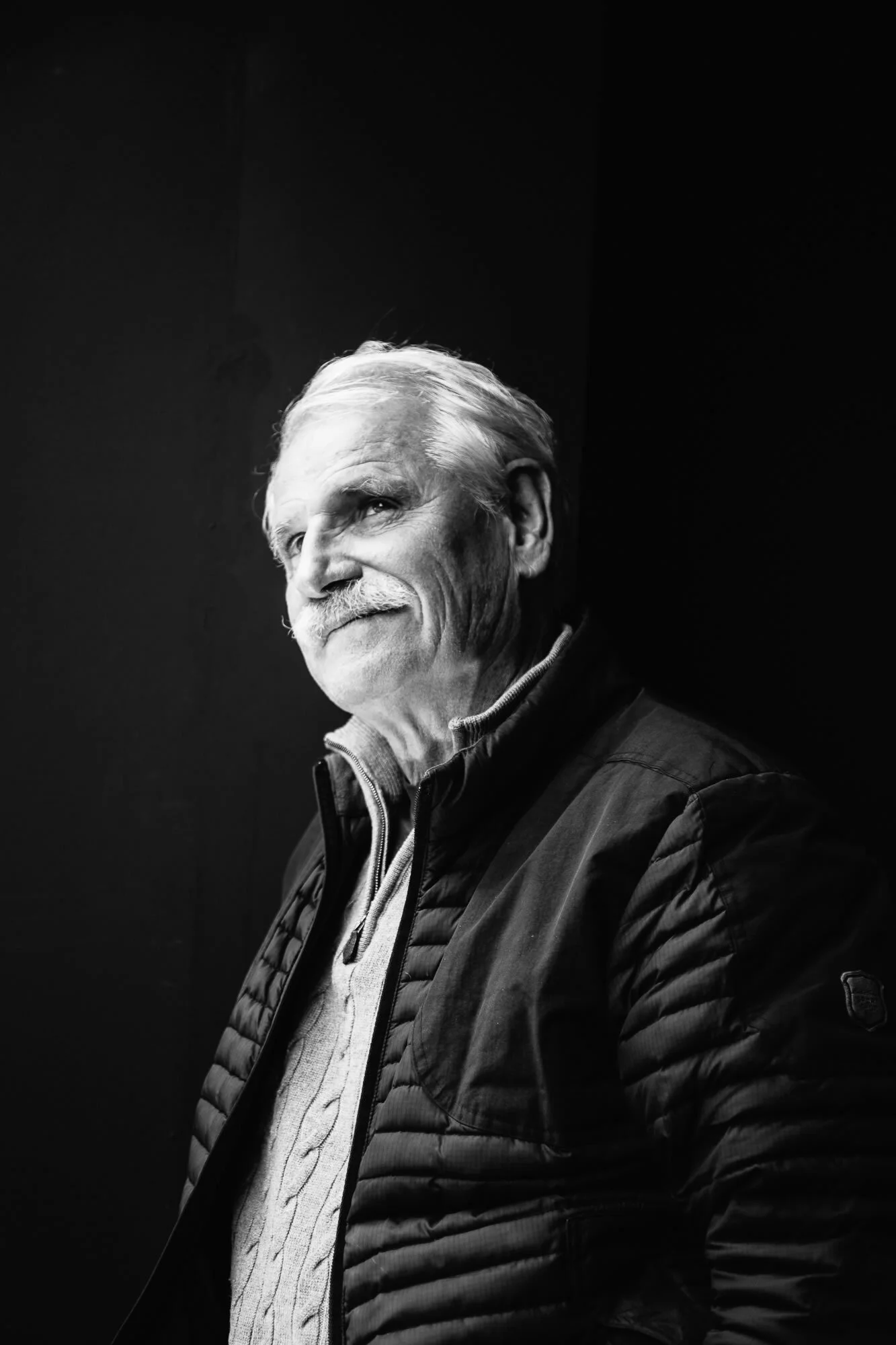
Yann Arthus-Bertrand. Stripped of visual noise; the void utilized to isolate the internal gravity of a visionary.
Conversely, there is the absolute discipline of reduction - removing the architectural context entirely and placing the subject against the void of a seamless backdrop. This is not a test of the subject, but a calculated isolation of their internal gravity. Stripped of their environment, the subject’s physical features must carry the entire weight of the frame alone. When we isolate a subject in this manner, we remove the noise of their tangible achievements and force the viewer to engage purely with their intellect.
In both approaches, the direction of the gaze is a vital, engineered mechanism. The subject does not need to stare down the barrel of the lens to establish dominance. Often, an off-camera gaze is far more potent. A gaze directed outward from an open door establishes stewardship and vision for what lies ahead; an upward gaze into the dark void instantly establishes the untethered mind of a dreamer. By deliberately directing their focus away from the camera, we do not merely capture them looking at us - we capture them seeing the world.
The Chromatic Abstraction: Color vs. Structure
The complexity of this negotiation deepens when deciding how the brain will process the visual data. The choice between colour and black-and-white is not an aesthetic preference; it is a neurological manipulation.
Colour is democratic and deeply tied to the present reality. It provides the brain with immediate, tangible data about time, temperature, and environment. But colour can also be a distraction - it allows the eye to wander toward the hue of a garment rather than the tension in a jawline.
To strip a portrait of colour is to apply the ultimate form of isolation. Black-and-white photography abstracts the subject, removing the noise of reality and forcing the brain to process pure structure. It reduces the human face to geometry, contrast, and luminosity. The viewer is no longer looking at a person in a specific moment; they are forced to engage directly with the timeless, underlying psychological architecture of the subject.
The Multiplicity of the Mask: Single vs. Group Dynamics
While a portrait of a single individual is a one-on-one duel of focus, introducing a second or third subject entirely shatters that dynamic.
A group portrait is not merely a collection of faces; it is a complex web of interpersonal friction. When multiple founders or a team are placed in front of the lens, they are no longer just performing for the camera—they are performing for each other. New masks emerge. Hierarchies are physically manifested in how they stand, where their eyes drift, and who commands the center of gravity.

Racines and Bozar Restaurant. The multiplicity of the mask; interpersonal dynamics engineered into a single, cohesive structural truth.
The image-maker must suddenly manage an ecosystem of egos. The objective shifts from breaking down a single persona to engineering the collective geometry of the group—aligning their disparate tensions into a single, cohesive structural truth.
The Micro-Mechanics of Truth
Whether navigating an environmental group portrait in hyper-saturated color or isolating a single founder in stark black-and-white, the final objective remains the same: bypassing the subject's conscious control.
The human brain is evolutionarily wired to read micro-expressions, hesitations, and manufactured confidence in a fraction of a second. As the author of the image, the goal is not to force a smile or dictate a pose. It is to engineer an environment of such absolute focus that the subject briefly forgets to perform.
It is an intense, sustained immersion in the moment - reading the breathing, the tension in the shoulders, and the subtle shifts in the eyes, waiting for the exact millisecond the mask slips.
The Weight of the Gaze

Architect Marc Corbiau. The environment removed, leaving only the weight of the gaze.