The Architecture of Illusion: Neuroaesthetics and the Mechanics of Perception
There is a fundamental misunderstanding about what happens when a lens is pointed at the physical world. The conventional belief is that the camera acts as a passive mirror, capturing a room, an object, or a moment exactly as it exists.

This is a fallacy. Photography does not document reality; it actively distorts it. By compressing three-dimensional environments into flat planes, it fractures the continuous flow of time into isolated fractions of a second, and strips subjects of their physical context.
Therefore, a photograph is never an objective reality. It is effectively an illusion. And mastering the mechanics of that illusion is the true discipline of the image-maker.
The Neurological Construction of Reality
This concept formed the core of my thesis during my Master of Interior Design studies. While the degree was rooted in the physical architecture of space, my research pivoted toward the psychological architecture of the image. I was not just examining how to photograph environments, but how the visual mechanisms of the camera could be used as a tool to create distinct illusions of scale, subject matter, and time.
This research was heavily anchored in the principles of Neuroaesthetics, developed by neuroscientists Semir Zeki and V.S. Ramachandran. They demonstrated that "seeing" is not a passive reception of visual data; it is an active, neurological construction. The brain is hardwired to seek out specific visual cues (contrast, isolation, grouping, and peak shifts) to instantly make sense of the world.
If the human brain relies on these predictable cues to understand reality, then the camera can be used to deliberately manipulate them. By hacking these neurological reflexes, we can engineer a perception on a flat surface that feels more potent than the physical subject itself.
The Mechanics of the Illusion
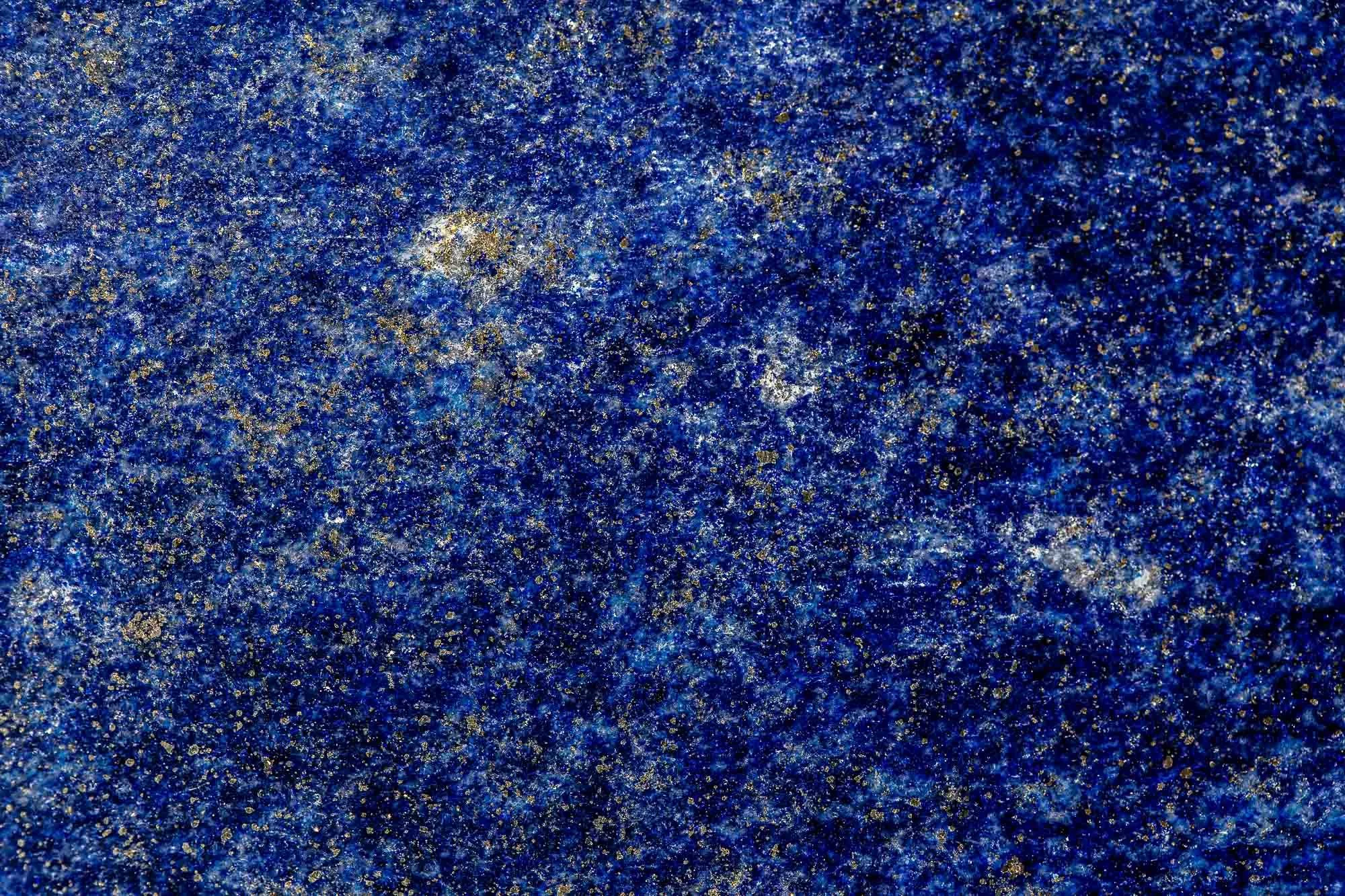
ABOVE: Lapis Lazuli